 |

Growing Skills: Pesticide ResistanceDear Reader Following on from last month's theme of conservation management, in this issue of Growing Skills we are looking at pesticide resistance. Growing numbers of pest species are becoming less susceptible to pesticide and insecticide treatments and are threatening crop production. We will cover strategies that can be incorporated into your pest management scheme, in order to maintain biodiversity whilst protecting agricultural yields. Best wishes James Natural Selection – Pesticide Resistance
The Insecticide Resistance Committee (IRAC) defines pesticide resistance as “a heritable change in the sensitivity of a pest population that is reflected in the repeated failure of a product to achieve the expected level of control”. The obvious solution would be to increase pesticide application. But is this really the best option to prevent crop losses? What are the potential impacts on biodiversity? Could other non-target species be affected? Could crops ultimately suffer? So what other steps can be taken? Some simple solutions include:
The Monsanto organisation also suggests using the latest agricultural advances such as Bt (Bacillus thuringiensis) to protect your crops, whilst decreasing or even possibly eliminating the need for pesticide sprays. Bt used as a topical spray is an alternative to pesticides, it encourages crops to produce a protein that is toxic to several varieties of insect larvae. |
|
|
|
Rural Skills Pest Control Training CoursesBasis Certificate in Crop Protection: Aimed at those working in the crop protection industry, this course is a prerequisite for those who wish to give advice on the use of Agrochemicals commercially. Also it would benefit farmers and managers of large-scale arable enterprises. Basis Plant Protection Award: This qualification required by the Crop Protection Association of its members' staff who regularly give advice. It's also the next step for any agronomist who wishes to demonstrate an advanced level of knowledge of Crop Protection Technology. Fertiliser Advisors Certification and Training Scheme: Designed to achieve a high technical standard, this intensive 5 day course is essential for agronomists, consultants, sales representatives and farm managers involved in fertiliser application, planning and advice. Pesticide Application Courses: We run courses covering safe use of pesticides, ground crop spraying, granule and hand held application techniques and sprayer operation. For more information on any of these course please contact me on 01285 889873 or via email at james.foster@rac.ac.uk Upcoming Course Information We still have availability on the following courses in April:
|
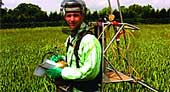 We are seeing increasing numbers of pest species adapting to survive against the pesticides and insecticides we use every day to protect agricultural production. Whilst this is part of natural selection, and with the GM debate ever in the forefront of our minds, this is a problem that if not tackled effectively could threaten agricultural yields.
| Send to a Friend - You may send this
newsletter to a friend |

|
You have received this issue of our newsletter because you requested it or I thought you would find it useful. If you would rather not receive any more issues, please follow this link. If this issue has been forwarded to you and you would like to receive regular issues, please follow this link. |
 |
