Dear Charlotte Welcome to 'To the Point', the newsletter for people who want to improve the way they communicate with others. This month: Ideas for Getting More Fun out of Learning, English Grammar - Hints for Improving your Writing and Conversation Free Download: Holding Effective Meetings News: Dealing with Bullying in the Workplace. Enjoy! With very best wishes Charlotte Playing to Learn…Rather than Learning to Play
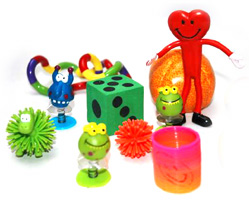
To be effective learning needs to be fun…..after all 'time flies when you are having fun'. Studies have found that people who take part in ‘silly games’ think more creatively and develop more innovative solutions to problems. A Cornell University study found people who had watched a funny film increased their creative flexibility. It also demonstrated they were better at coming up with creative solutions to problems than those who had not watched the film. The Training Shop, who sell these toys and games online for trainers have a great brain teaser you can use at your next business meeting to liven up your team. Ask everyone to write down the word A T T I T U D E. Allocate a number to each letter A=1 B=2 Z=26 etc and then invite them to add them up The answer is 100 - how spooky is that? So now why not apply 100% positive attitude to all your new ideas? |
|
Are you the Subject or the Object? A Key part of English grammar is understanding the principle of Subject and Object. It makes writing so much easier. Many people missed out on learning grammar at school and often do not know how it works until they come to learn a foreign language where grammar is still taught. Sentences are often made up of a Subject and an Object. The Subject comes first and the Object usually after the verb. This is very straightforward for example: "the dog (subject) bit the man" (object). However once we start using pronouns, the cute little words that describe us, things get a little bit sticky…. The following are used when we are the Subject. I, he, she, they; And when we are the Object me, him, her, them So we have 'I like him', 'he likes her', 'she likes him'. When there is more than one pronoun We can have ‘he and she like him’ ‘She likes them’. Easy. However people often get ‘me’ and ‘I’ muddled. 'I' is always the subject and 'me' is always the object of the sentence for example: ‘I’ visit my friend and my friend visits ‘Me’ Beware of using them in the wrong place. We cannot say for example; ‘Me and him went downstairs.' Now just went you thought that's OK we need to mention one other tiny rule with the 'I' pronoun that says we cannot say 'I and he went downstairs' because when 'I' is paired with another pronoun 'I' very graciously, comes second in the list, so it is ‘He and I went downstairs. Finally those other much misused words 'myself' 'yourself' 'ourselves' should only used when the Subject and Object are the same person such as: 'He fancies himself.' 'She is proud of herself.' 'I made it myself.' Next month we will tackle when we use 'That' and when we use 'Which'. And what's the difference when you speak on the part of someone and when you speak on behalf of someone? |
Why do Meetings Go Wrong?A client recently complained to me that meetings he held never seemed to work. He had experienced every response from apathy to disruptive takeovers and was at the end of his tether. "I don't know why I bother to keep people informed and involved when they patently aren't interested" he said. So for him and anyone else who recognises this scenario download free 'Eight Steps to Holding Effective Meetings' at http://www.quicklearn.co.uk and check out the Top Tips page OTHER NEWSLast month I attended the launch of the National Bullying Helpline which is a charity with a remit to ban bullying in the workplace forever. The launch took place at the House of Commons hosted by Swindon South MP Anne Snelgrove. Speakers included Gavin Jones, Chief Executive of Swindon Borough Council and Professor Cary Cooper the Patron of the Charity. The statistics published by the Chartered Management Institute are startling: Bullying costs the British economy £32 billion. 1 in 4 people allege they are currently experiencing bullying. So this charity is timely. The helpline is 0845 22 55 787 and provides free advice to both employees who think they maybe being bullied as well as for employers with concerns about bullying in their organisation visit www.nationalbullyinghelpline.co.uk and order your free copy of their Step by Step Guide to Dispute Resolution |

|
You have received this issue of our newsletter because you requested it or I thought you would find it useful. If you would rather not receive any more issues, please follow this link. If this issue of To The Point has been forwarded to you and you would like to receive regular issues, please follow this link. |
 |
